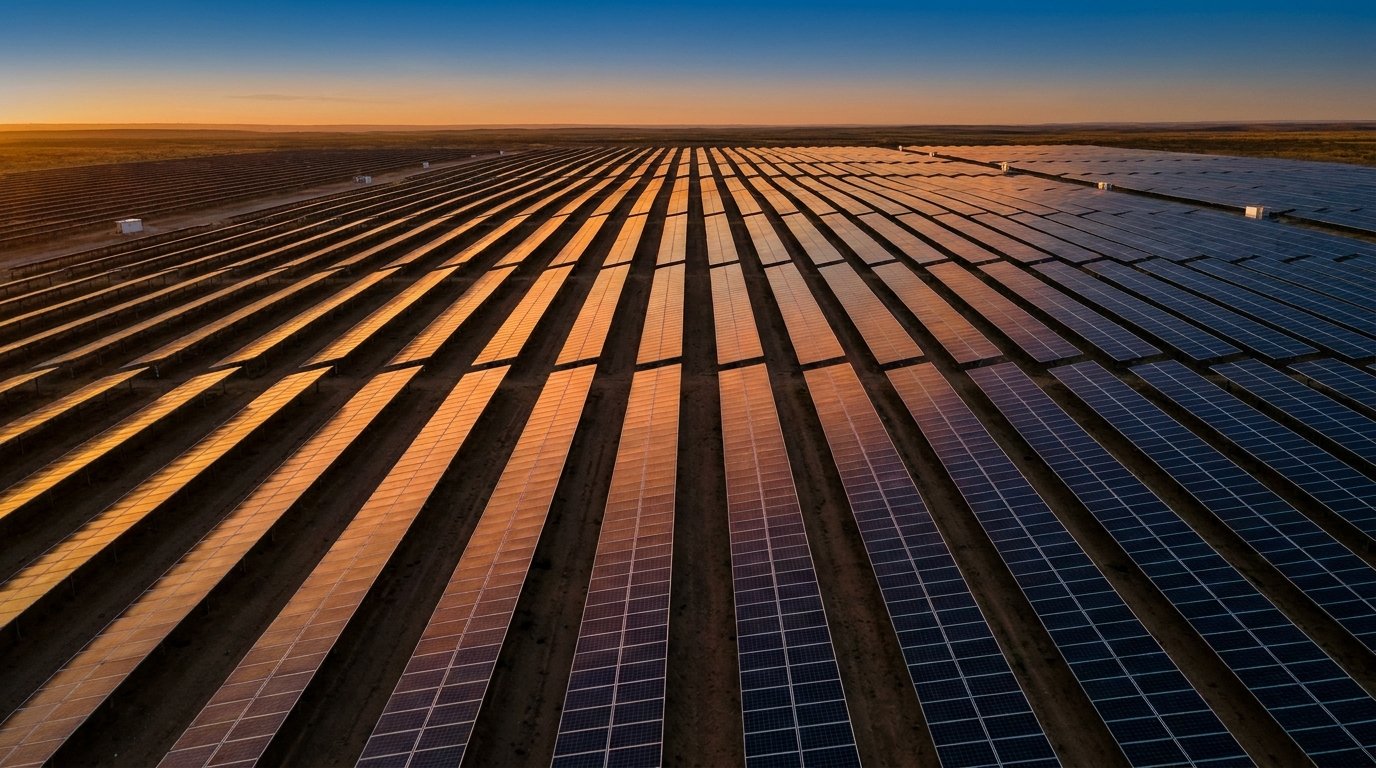
High-Efficiency Solar Modules Engineered for Long-Term Performance
Power your solar projects with Skkytop ACE Series solar modules, designed to deliver dependable energy generation through advanced cell technology, bifacial construction and durable module engineering.
From commercial rooftops and industrial facilities to large-scale solar installations, the ACE Series offers a range of Mono PERC and N-Type TOPCon modules to match different project requirements.

Getting More from Every Solar Installation Starts with the Right Module
Installing solar panels is a long-term investment. But choosing a module based only on its rated wattage can lead to an incomplete assessment of project performance.
Factors such as module efficiency, temperature behaviour, rear-side power generation, installation conditions and long-term degradation all influence how a solar installation performs. For commercial and industrial projects, these considerations become especially important when evaluating available installation space, expected energy output and overall project economics.
That’s where the Skkytop ACE Series makes a difference. Combining established Mono PERC technology with advanced N-Type TOPCon bifacial modules, the ACE Series provides multiple options for solar developers, EPC contractors and industrial project owners.
Solar Modules for Different Project Requirements
Industrial Rooftop Solar
Utilise available factory roof space to support on-site renewable electricity generation.
Commercial Solar Projects
Explore solar module options for commercial facilities and institutional buildings.
Utility-Scale Solar Farms
Evaluate high-wattage bifacial modules for large-scale solar installations.
Agricultural Solar Applications
Consider solar solutions for suitable agricultural and rural energy projects.
Floating Solar Projects
Explore project-specific solar module configurations for suitable water-body installations.
Hybrid Solar Systems
Integrate solar generation into appropriately designed hybrid energy systems.
Solar Technology That Supports Better Project Performance
Mono PERC Technology
The ACE Mono PERC range uses 10BB cell technology and bifacial glass-to-glass construction. Available models include 540–555 Wp and 580–600 Wp modules.
N-Type TOPCon Technology
The ACE PRO and ACE MAX ranges use N-Type TOPCon 16BB bifacial technology. These modules are designed for higher power output and long-term performance, with model capacities extending up to 650 Wp.
What Is Bifacial Solar Technology?
Conventional monofacial solar panels primarily generate electricity from sunlight received on their front surface. Bifacial solar modules are designed to capture sunlight from both the front and rear sides. The rear side can utilise reflected sunlight from the installation surface and surrounding environment, creating additional electricity generation potential.
- Potential for additional energy generation through rear-side illumination.
- Better utilisation of available sunlight.
- Additional performance potential depending on installation conditions.
- Suitable for projects designed to benefit from bifacial module construction.
The actual bifacial gain depends on factors such as ground reflectivity, mounting height, spacing and site design. It should be assessed as part of the project-specific energy yield calculation.
Mono PERC vs N-Type TOPCon: Which Technology Should You Choose?
| Parameter | Mono PERC | N-Type TOPCon |
|---|---|---|
| Cell technology | Mono PERC 10BB | N-Type TOPCon 16BB |
| Module construction | Bifacial glass-to-glass | Bifacial glass-to-glass |
| Product options | ACE series | ACE PRO and ACE MAX |
| Key consideration | Established module technology | Advanced N-Type cell technology |
| Selection approach | Project specifications and economics | Efficiency, output and lifecycle requirements |
Designed Around the Factors That Matter in Solar Projects
Bifacial Glass-to-Glass Construction
The dual-glass structure supports bifacial module design, allowing the rear surface to utilise reflected sunlight where installation conditions permit.
Anti-Reflective Coated Glass
Anti-reflective (AR) coated glass helps improve light utilisation at the module surface.
PID Resistance
The modules incorporate PID-resistant materials or construction, helping address the risk of potential-induced degradation.
Durable Module Construction
Selected ACE models feature 6005-T6 anodised aluminium alloy frames and mechanical load ratings of 5400 Pa on the front and 2400 Pa on the rear.
Protection Against Environmental Exposure
Selected models feature IP68-rated junction boxes, UV-resistant encapsulants and weather-resistant electrical components.
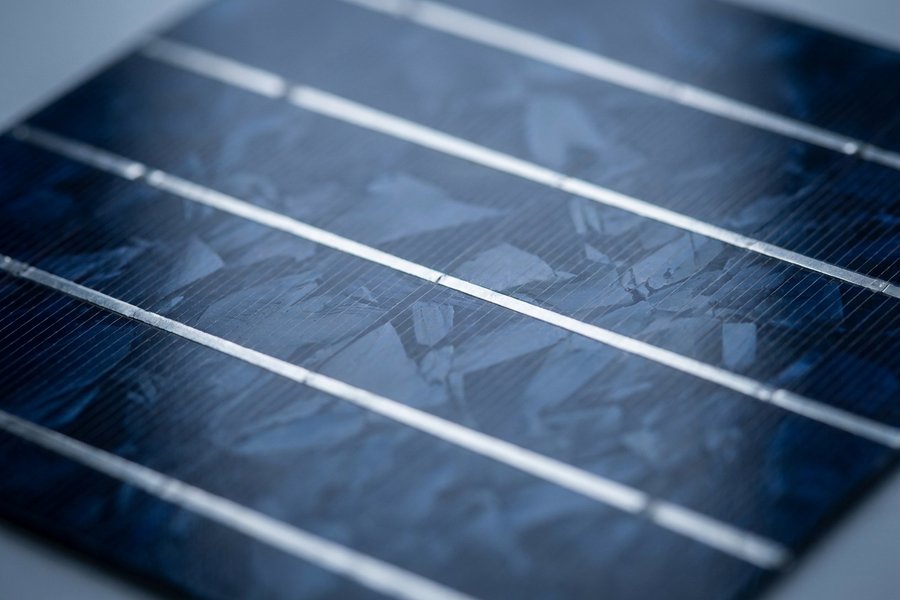
Explore the Skkytop ACE Series Solar Modules
Whether you are planning an industrial rooftop installation or a large-scale solar project, the ACE Series offers different module capacities and technology configurations.
ACE – 540 Wp to 555 Wp
- Bifacial glass-to-glass construction
- 144 half-cut solar cells
- Anti-reflective coated glass
- Positive power tolerance with current binning
Suitable for: Projects evaluating the 540–555 Wp module range.
ACE – 580 Wp to 600 Wp
- Bifacial glass-to-glass construction
- 156 half-cut solar cells
- Heavy-duty 6005-T6 aluminium frame
- PID-resistant module
- IP68-rated junction box
Suitable for: Projects requiring higher-wattage Mono PERC modules.
ACE PRO – 580 Wp to 605 Wp
- 144 half-cut N-Type TOPCon bifacial cells
- Module efficiency up to 23.42%
- Anti-reflective coated front glass
- PID-resistant and UV-resistant encapsulant
- 5400 Pa front and 2400 Pa rear mechanical load rating
Suitable for: Projects evaluating advanced N-Type TOPCon technology.
ACE MAX – 610 Wp to 625 Wp
- 132 half-cut N-Type TOPCon bifacial cells
- Module efficiency up to 23.14%
- 80% ± 5% bifaciality factor
- Glass-to-glass construction
- IP68-rated junction box
Suitable for: Projects requiring high-wattage N-Type modules.
ACE MAX – 615 Wp to 650 Wp
- 132 half-cut N-Type TOPCon bifacial cells
- Module efficiency up to 24.06%
- 80% ± 5% bifaciality factor
- Enhanced crack tolerance MBB module
- Excellent PID resistance and zero LID
- Better weak-light performance
Suitable for: Large-scale projects prioritising higher module wattage and efficiency.
Common warranty offering across these five datasheets: 12-year product warranty on materials and workmanship and 30-year linear performance warranty. Warranty coverage is subject to the applicable Skkytop warranty documentation and terms.
Why Does Solar Panel Efficiency Matter for Your Project?
Solar module efficiency indicates how effectively a panel converts the sunlight falling on its surface into electrical power. For installations with limited available space, module efficiency becomes an important selection factor.
A higher-wattage module may help achieve the required installed capacity with fewer modules, depending on its dimensions and the overall system design. However, wattage alone does not determine the energy generated by a solar installation.
- Solar irradiance at the project location.
- Module operating temperature.
- Orientation and tilt angle.
- Shading and installation conditions.
- Inverter and system configuration.
- Rear-side irradiance for bifacial modules.
How Does Temperature Affect Solar Module Performance?
Solar modules operate under varying environmental conditions. As cell temperature increases, electrical output can decrease. This is why temperature coefficients are important when comparing solar modules, particularly for installations exposed to high ambient temperatures.
For example, the ACE PRO 605 Wp datasheet specifies a Pmax temperature coefficient of -0.29%/°C, while the ACE MAX 650 Wp datasheet provides a maximum module efficiency of 24.06%. Understanding these parameters helps project designers evaluate module performance under the expected site conditions.
Technical Specifications – Comparison
| Product | Technology | Capacity | Maximum efficiency |
|---|---|---|---|
| ACE | Mono PERC 10BB | 540–555 Wp | 21.56% |
| ACE | Mono PERC 10BB | 580–600 Wp | 21.48% |
| ACE PRO | N-Type TOPCon 16BB | 580–605 Wp | 23.42% |
| ACE MAX | N-Type TOPCon 16BB | 610–625 Wp | 23.14% |
| ACE MAX | N-Type TOPCon 16BB | 615–650 Wp | 24.06% |
Efficiency figures are the maximum values listed in the respective datasheets, not guaranteed values for every model.
Quality Control Begins During Manufacturing
The long-term performance of a solar module depends on more than the technology used in its solar cells. Manufacturing consistency, material quality and testing processes also play an important role.
At Skkytop, the manufacturing ecosystem includes automated production processes for module framing, lamination and final packaging, supported by testing facilities, storage and logistics infrastructure.

Pre and Post EL Testing
Checks for cell cracks and module integrity.
Flash Testing
Verifies module power output.
Quality Compliance
Quality processes supported by applicable product and management-system certifications.
Manufacturing Control
Automated production processes for consistency across module manufacturing.
Product Certifications and Management Systems
The ACE datasheets list relevant product standards and management-system certifications, including:
The exact standards listed vary between product datasheets. Display only certificates and approvals applicable to the selected product.
Long-Term Warranty Support
The product range carries a 12-year product warranty and a 30-year linear performance warranty, subject to the applicable warranty terms.
On materials and workmanship.
Warranty coverage is subject to the applicable Skkytop warranty documentation and terms.
Beyond Solar Modules – Supporting Your Solar Project Requirements
Selecting the right solar module is only one part of a successful solar installation. Project design, procurement, structural considerations and installation planning are equally important.

Engineering
Site-specific layouts, structural design and energy simulations to support project planning.
Procurement
Sourcing high-quality and cost-effective materials for project requirements.
Construction
Installation planning with a focus on safety and timely project execution.
Skkytop also describes tailored solutions for rooftop retrofitting, hybrid integration, ground-mounted installations and floating solar applications.

Need help evaluating your options?
Share your project capacity, installation type and location with the Skkytop team to identify suitable module configurations.
Get Module Selection AssistanceNot Sure Which ACE Module Is Right for Your Project?
Selecting a solar module involves more than choosing the highest available wattage. A module must match your system design, installation conditions and energy requirements.
| Selection factor | What to evaluate |
|---|---|
| Required system capacity | Total planned installed DC capacity |
| Available installation area | Module dimensions and layout |
| Technology | Mono PERC or N-Type TOPCon |
| Module efficiency | Power output relative to module area |
| Bifacial potential | Ground reflectivity and rear-side exposure |
| Temperature coefficient | Expected operating temperature |
| Mechanical requirements | Wind, snow and mounting conditions |
| Warranty | Product and linear performance coverage |
How can I request a quotation for ACE Series modules?
Contact the Skkytop team with your required module capacity, project location, application type and approximate system size to discuss suitable product options and availability.
What to include in your enquiry:
- ‣ Required module capacity
- ‣ Project location
- ‣ Application type
- ‣ Approximate system size
Frequently Asked Questions
What is the Skkytop ACE Series?
The Skkytop ACE Series is a range of solar modules incorporating Mono PERC and N-Type TOPCon technologies. The supplied datasheets cover module capacities from 540 Wp to 650 Wp.
What is the difference between Mono PERC and N-Type TOPCon solar panels?
Mono PERC and N-Type TOPCon use different solar cell technologies. The ACE Mono PERC range uses 10BB cells, while ACE PRO and ACE MAX use N-Type TOPCon 16BB technology. Their electrical specifications and efficiency vary by model.
What are bifacial solar modules?
Bifacial modules can generate electricity from both their front and rear surfaces. Their additional energy generation potential depends on reflected sunlight and installation conditions.
What is the advantage of glass-to-glass solar panels?
Glass-to-glass modules use glass on both the front and rear sides. This construction supports bifacial module design and provides a dual-glass structure.
What is the maximum wattage available in the ACE Series?
The highest wattage listed in the supplied ACE datasheets is 650 Wp, available in the ACE MAX N-Type TOPCon 16BB range.
What warranty is available with Skkytop ACE solar modules?
The supplied datasheets specify a 12-year product warranty on materials and workmanship and a 30-year linear performance warranty. Complete coverage is subject to the applicable warranty documentation.